Browser-based deep learning
O-GlcNAcPRED-DL
Predict human and mouse protein O-GlcNAcylation sites from FASTA sequences with an ensemble deep-learning model.
Explore O-GlcNAcPRED-DL
All prediction resources
About the model
Sequence-based candidate site prediction
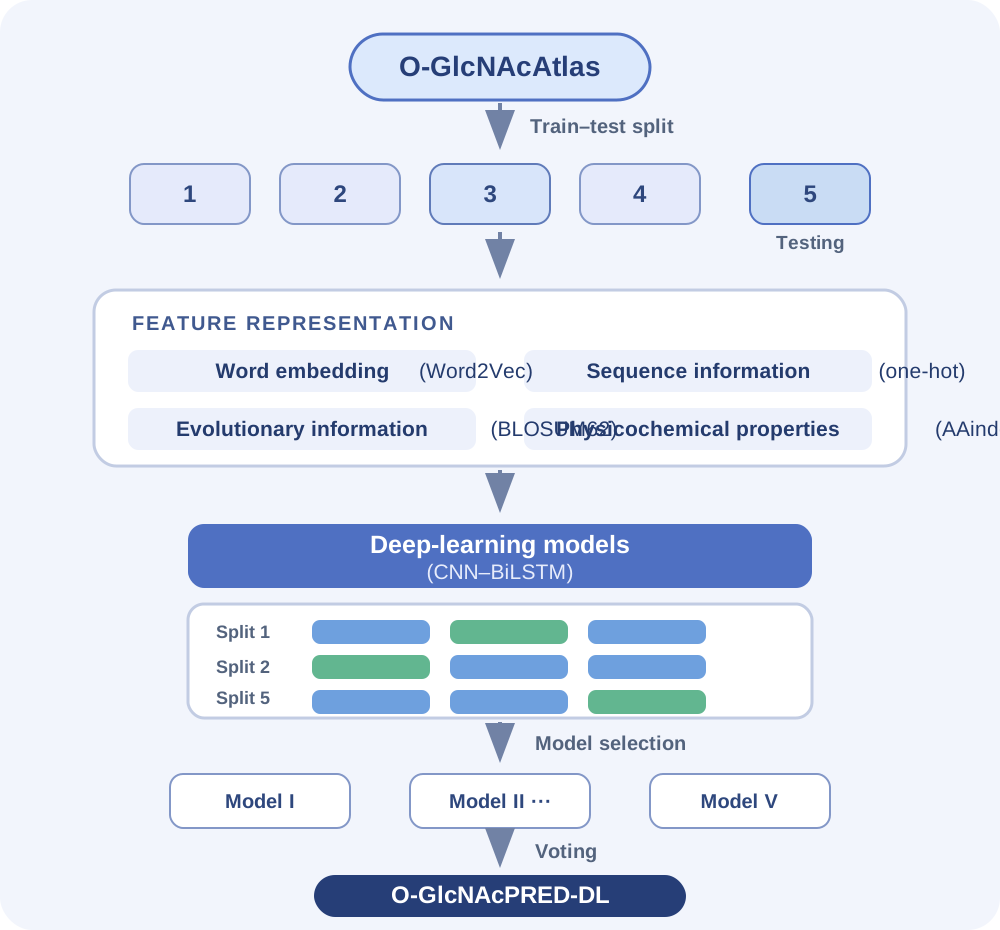
O-GlcNAcylation functions in a protein- and site-specific manner. Despite substantial progress in experimentally mapping O-GlcNAc sites, prediction remains challenging. O-GlcNAcPRED-DL applies the published species-specific deep-learning ensembles to human or mouse protein sequences.
Compared with existing methods, O-GlcNAcPRED-DL showed improved sensitivity and accuracy in the published study. It can help expedite discovery of candidate O-GlcNAc sites, especially in human and mouse proteins, and support study of their functions in physiology and disease. Predictions should prioritize experimental work, not replace experimental evidence.
Cite O-GlcNAcPRED-DL
Cite the O-GlcNAcPRED-DL publication when reporting model predictions or performance.